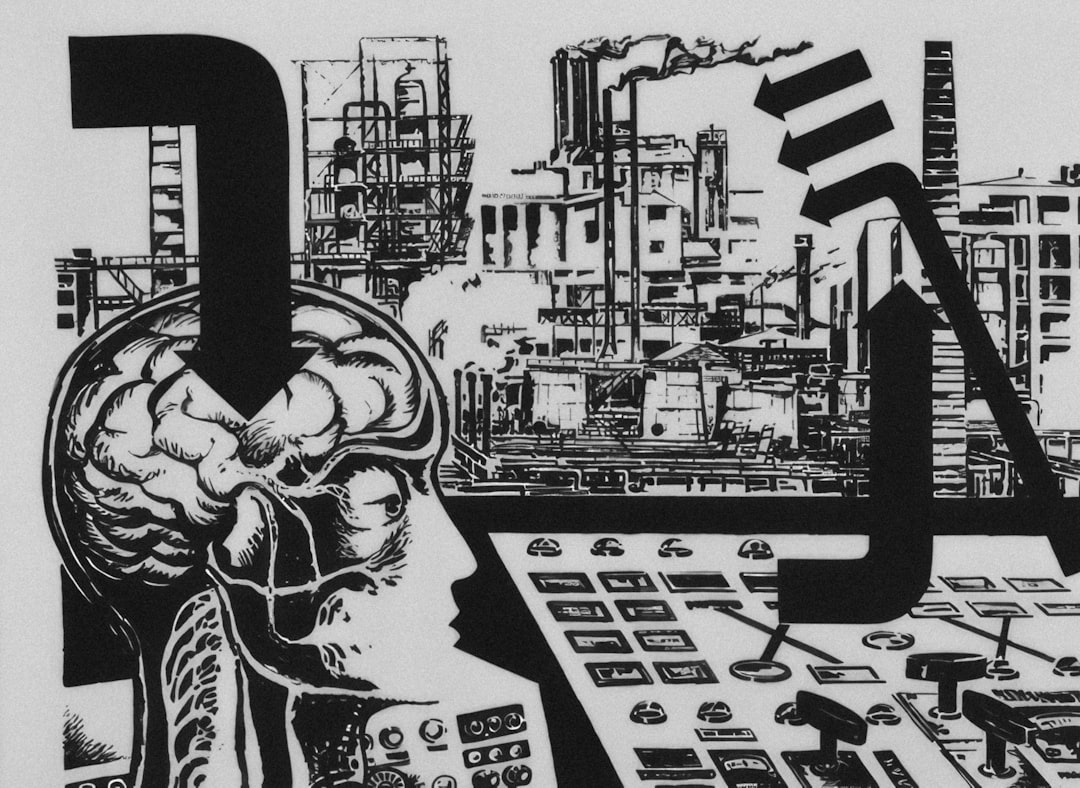
AI Market Forces are no longer a background idea for strategy decks. They are changing how companies price work, organize teams, choose software, and decide where growth should come from. I keep seeing leaders talk about AI as if it were only a tool choice, when the bigger shift is economic. Once the cost of producing useful output changes, the whole business model starts to move with it.
That matters because most companies still run on assumptions built for a different era. A task used to require a person, a review step, and a queue. Now the same task may be assisted by software in minutes. The real question is not whether a team should use AI. The real question is which parts of the business become cheaper, faster, or more flexible because of it. I wrote a deeper companion piece on AI and Market Forces if you want to compare this article with a broader framing.
This article is a practical guide for leaders who need to respond without chasing every trend. The goal is simple. Map where the economics are changing, identify the decisions that now carry more weight, and build a response that can hold up for more than one budget cycle.
AI Market Forces and the cost curve
The best place to start is the cost curve. For years, many businesses scaled by adding labor. More demand meant more staff. More staff meant more coordination. More coordination meant slower decisions and more overhead. AI changes that pattern by lowering the effort required for tasks like drafting, sorting, summarizing, comparing, and routing information. Those are not small tasks. They are often the glue that holds the day together.
When the cost of producing a first draft drops, the work around it changes too. People spend less time starting from zero and more time reviewing, refining, and deciding. That does not make people less valuable. It changes where value sits. Judgment, context, and quality control become more important than raw output volume.
Leaders should look at three questions. Where does the business spend time on repetitive information work? Where do delays come from? Where do decisions wait on human bandwidth? If AI reduces the friction in those places, the effect can ripple through the entire operation. What looked like a small efficiency gain may actually alter customer response time, internal margins, and hiring plans.
There is a useful way to think about it. Imagine every task in your company as sitting on one of three shelves. The first shelf is routine work that can be assisted or standardized. The second is judgment work that still needs a person but can be supported by software. The third is relationship or accountability work that stays human. Most companies do not need to move all three shelves. They need to know which shelf carries the most cost and the most delay.
- Routine work includes summarizing, categorizing, drafting, and basic research.
- Judgment work includes reviewing, prioritizing, and choosing between options.
- Relationship work includes client trust, negotiation, and cross-functional alignment.
The businesses that adapt fastest usually know exactly where the curve bends. They do not wait for the entire organization to change at once. They start with one expensive bottleneck and redesign around it.
Pricing is moving from time-based to outcome-based
Pricing is where AI Market Forces become visible to customers. If a task takes less time to complete, customers start asking why the old price still applies. That does not mean every price should fall. It means the logic behind pricing is under pressure. A business that once billed for effort may need to explain value in terms of speed, accuracy, convenience, or outcome quality.
I see three pricing patterns again and again. The first is compression. Work that was billed by the hour becomes harder to defend at the old rate if the workflow is much faster. The second is expansion. If AI allows a company to add more value without adding proportional cost, it can sometimes bundle more into the offer. The third is unbundling. Customers may stop paying for a broad package and instead buy smaller modules that feel more relevant to their needs.
That means leaders need to inspect which parts of the offer are still based on manual effort. Hours are easy to sell when the buyer cannot see the work. They are much harder to defend when the buyer can compare turnaround time, output quality, and service depth across vendors. A better pricing model often starts with one simple question. What result is the customer actually paying for?
Here is a practical pricing checklist.
- Does the price reflect effort, outcome, or risk reduction?
- Can the customer see the value in one sentence?
- Are we charging for the full package when the customer only values part of it?
- Can we offer a faster tier, a managed tier, or a premium tier?
- Would a clearer outcome-based promise improve close rates?
One useful move is to stop using time as the main anchor in sales conversations. Instead of saying a project takes forty hours, explain the business result the buyer gets, the checkpoints involved, and the tradeoff between speed and control. That shift can make pricing discussions less defensive and more strategic.
The point is not to charge more or less automatically. The point is to make sure the price still matches what the customer values now. Markets change slowly at first, then quickly. Pricing is usually where the change shows up first.
Hiring is shifting from headcount to leverage
Hiring is changing just as sharply. For a long time, growth meant adding people by function. Sales added sellers. Marketing added writers. Operations added coordinators. Support added more agents. That structure still exists, but AI Market Forces are changing the logic behind it. Teams are increasingly judged by leverage, not just size.
Leverage means one person can create more useful output because the workflow is better. A strong hire can now multiply the work of a whole team if they know how to use AI inside the process. That changes the profile of the people worth hiring. The most valuable candidates are often not the ones who say they can use AI. They are the ones who can redesign how work gets done around it.
I think of hiring in three layers. First are operators, people who can use the tools in daily work without losing quality. Second are translators, people who can turn business goals into repeatable workflows. Third are designers, people who can rethink the system itself. A company that only hires operators may get short-term efficiency. A company that hires all three types can reshape the organization.
That also means job descriptions need a rewrite. Lists of tasks are not enough. I would ask what decisions the role should improve, what manual steps should shrink, and what outcomes should become easier to track. The old question was whether someone could do the work. The new question is whether someone can improve the system that produces the work.
For managers, there is a practical hiring filter that helps.
- Can the person explain their workflow clearly?
- Can they show where software can reduce friction?
- Can they validate output instead of just generating it?
- Can they design a process that another person could repeat?
- Can they talk about quality and speed together?
This matters because many companies still hire for the world they had, not the world they are moving into. If AI reduces routine load, then hiring only for routine execution may not create the leverage the business needs. The best teams will blend judgment, systems thinking, and tool fluency. That combination tends to matter more than raw headcount.
Distribution now matters more than raw capability
One of the biggest mistakes I see is assuming better capability automatically leads to better results. It does not. If more companies can produce acceptable output with AI, raw capability spreads quickly. Once that happens, distribution becomes the real edge. Who gets seen first? Who is trusted faster? Who has a clearer channel to the buyer?
Distribution includes more than marketing. It includes audience trust, direct relationships, timing, and the ability to turn attention into action. A company with average output and excellent distribution can often outperform a company with stronger output and weak reach. That is especially true when many players can now make decent drafts, simple visuals, and basic summaries.
This is why content and community still matter. AI can help produce more material, but it does not automatically create belief. In crowded markets, buyers often use trust signals to decide what deserves a closer look. That means the companies that can explain themselves clearly, show proof, and stay visible across the right channels may have a meaningful advantage.
Here is a simple distribution audit I use.
- Can a new buyer understand the offer in under a minute?
- Do we have a channel that reaches buyers without paying for every click?
- Can our best customer tell our story better than our homepage can?
- Do we have proof that is easy to share?
- Are we visible in the places where decisions actually start?
Companies often think they have a product problem when they really have a distribution problem. If the message is weak, the proof is hard to find, or the customer cannot tell what makes the offer different, the market will treat the product as interchangeable. AI can make content production faster, but it also raises the standard for clarity. There is more material everywhere. That means the companies that communicate with precision can stand out more easily.
The lesson is simple. Capability spreads. Distribution compounds. If you can build both, the business gets harder to copy.
The AI vendor stack is splitting into layers
Another force that leaders need to watch is the vendor stack. AI is not one market. It is a stack of markets. Some companies sell model access. Some sell orchestration. Some sell integrations. Some wrap existing tools around a narrow workflow. Some sell services built around adoption and implementation. These layers do not behave the same way, and they do not keep the same margins for long.
In the early stage of any technology wave, excitement can lift nearly every vendor. Buyers want to experiment. Budgets are loose. Demos matter. Then the market tightens. Procurement wants security, workflow fit, and measurable value. That is usually when the market starts to separate into clear winners and everyone else.
When I evaluate an AI vendor, I ask four things. Does it reduce real work, not just demo friction? Does it fit the systems we already use? Does it hold up when quality shifts? And how hard would it be to replace later if our needs change? Those questions matter more than a feature list.
The market is likely to reward vendors that become part of the operating rhythm. A tool that saves ten minutes in a demo is interesting. A tool that stays useful after six months of real work is valuable. That gap matters. Businesses tend to pay for reliability, not novelty, once the initial excitement fades.
For buyers, a useful selection lens is the following.
| Vendor layer | What it solves | What to inspect |
|---|---|---|
| Model layer | Access to core intelligence | Quality, cost, latency, roadmap |
| Workflow layer | Task execution inside a process | Ease of use, human review, fit |
| Integration layer | Connection to existing tools | Data flow, permissions, reliability |
| Services layer | Implementation and change management | Support depth, expertise, scope |
The stack will keep shifting. That is normal. What matters is whether the company buying the tools understands which layer it is actually buying into. A flashy wrapper may be fine for a small workflow. A more serious operational need may require something deeper. Leaders who separate novelty from operating value are usually in a better position to make durable choices.
Small firms can move faster if they redesign the workflow
Small firms often think they are at a disadvantage because they have fewer people and fewer resources. I do not think that is the full story. In many cases, smaller companies adapt faster because they have fewer layers of approval and less legacy process. AI Market Forces can favor that kind of speed, if the team is willing to redesign how work flows instead of just adding another tool on top of an old process.
The biggest mistake small firms make is automating a broken routine. If the process is messy, making it faster only creates mess at a higher speed. The better move is to look for one or two bottlenecks where work gets stuck, then rebuild the workflow around them. That often creates more value than spreading AI across everything at once.
In a small company, one well-designed workflow can change the day. For example, if customer inquiries are routed faster, response times improve. If proposal drafts begin with a reusable outline, sales cycles may shorten. If routine reporting becomes automated, the founder gets more time for decisions. These are not flashy changes, but they can alter the business enough to matter.
Small companies also have a practical advantage in customer knowledge. They often know the buyer more intimately than larger firms do. AI can improve speed, but the human team still owns taste, judgment, and context. That combination is powerful. Software can do the repeatable part. People can protect the part that requires judgment.
A small-firm checklist looks like this.
- Where do we lose the most time each week?
- Which task causes the most rework?
- Where does the customer feel the most delay?
- What would change if one person could handle more without quality loss?
- What process should stay fully human?
Speed is useful only when it is pointed in the right direction. Small firms that use AI to shorten the distance between insight and action can move as if they were much larger. That is the real opportunity.
Build a practical operating model for leaders
Most strategy discussions fail because they stay abstract. Leaders talk about transformation, but teams need steps. The most useful response to AI Market Forces is not a big announcement. It is a practical operating model that changes how the company works week by week.
Start by mapping the flow of work. Where does a request enter? Where does it stall? Where does someone need to review it? Where does it repeat? Where do people spend time on copying, summarizing, searching, or cleanup? Those are often the best places to explore AI support because the gains are visible and the risk is easier to manage.
Then pick one metric. Just one. Maybe it is response time, output per employee, conversion rate, first-draft turnaround, or handoff quality. A metric gives the team a target that is more useful than a vague instruction to use AI more. Without a clear target, experiments can feel busy without changing the business.
After that, define rules of use. Which tasks may be assisted? Which tasks need human review? Which tasks should stay entirely human? Clear rules reduce confusion and make adoption easier. They also prevent a situation where every person invents their own process and no one knows what good looks like.
This is the sequence I would use.
- Choose one workflow with obvious friction.
- Measure the current time, cost, and error pattern.
- Test an AI-assisted version with a small group.
- Compare the result against the baseline.
- Keep the version that improves speed without weakening quality.
- Document the new process so it can be repeated.
That last step matters more than it sounds. A company does not gain much from isolated wins. It gains from repeatable wins. Once a workflow works, write it down, train on it, and review it every few months. The operating model should not be static. It should absorb new tools while keeping the parts that already work.
Measure the right signals every month
If you want to know whether your response is working, measure the signals that reflect actual market change. I would not rely on vanity metrics alone. Instead, I would watch a small set of indicators that show whether AI is changing the business in a meaningful way.
One signal is labor mix. Are you hiring more generalists, workflow designers, and operators who can steer tools effectively? Or are you still hiring only for legacy task buckets? Another signal is pricing behavior. Are offers being bundled, unbundled, or renamed around outcomes? That often tells you more than a strategy memo.
Procurement behavior is also revealing. If buyers start asking more about security, integration, and proof, the market is maturing. Distribution quality matters too. If your best channel becomes less effective, or if a new channel suddenly works better, that tells you where attention is shifting. Finally, watch workflow design. Are teams redesigning the process, or just putting AI on top of it?
Here is a monthly review checklist I would actually use.
- What workflows got faster?
- Where did quality improve, stay flat, or fall?
- Which task created the most savings?
- Which role needs a redesign?
- Which vendor is becoming more central to the operating model?
- What customer question comes up more often now?
The goal is not to chase every new change. The goal is to detect which changes are real. Some tools will matter for a month and disappear from memory. Others will quietly alter how the company runs. Monthly measurement helps leaders tell the difference.
That is especially important because the companies that win this cycle will probably not be the loudest ones. They will be the ones that notice the changes early, adjust the workflow, and keep the business readable to customers and employees.
What to do in the next 90 days
If I were advising a leadership team today, I would not start with a grand transformation roadmap. I would start with a 90-day plan built around one workflow, one pricing decision, and one hiring question. That is enough to learn something useful without freezing the rest of the business.
In the first 30 days, map the work. Identify where time is lost, where rework happens, and where customers feel delay. Choose one workflow that is visible enough to measure and small enough to test. Do not try to fix everything. Pick the bottleneck that is both annoying and expensive.
In the next 30 days, run a controlled experiment. Test an AI-assisted version of the workflow with a small group. Measure speed, quality, and handoff clarity. Compare the results to the old process. If the new version helps, document what changed. If it does not help, learn why and adjust the design.
In the final 30 days, connect the workflow change to business decisions. Does the new process support a pricing update? Does it change the kind of hire you need next? Does it change what the customer sees as valuable? That is the moment when a tool becomes part of strategy.
Here is the 90-day sequence in short form.
- Map one workflow.
- Measure the baseline.
- Test one alternative.
- Compare speed, quality, and cost.
- Update pricing or staffing assumptions if the data supports it.
- Write down the new operating rule.
The point of the plan is not to produce a dramatic headline. It is to create enough evidence that the company can make better decisions next quarter than it made this quarter. That is usually how structural change happens. It starts small, then reaches pricing, hiring, and growth before most people realize the shift is already underway.
The companies that handle this well will not just use AI more often. They will think differently about what work costs, what talent is worth, and how value reaches the customer. That is the real impact of AI Market Forces.